
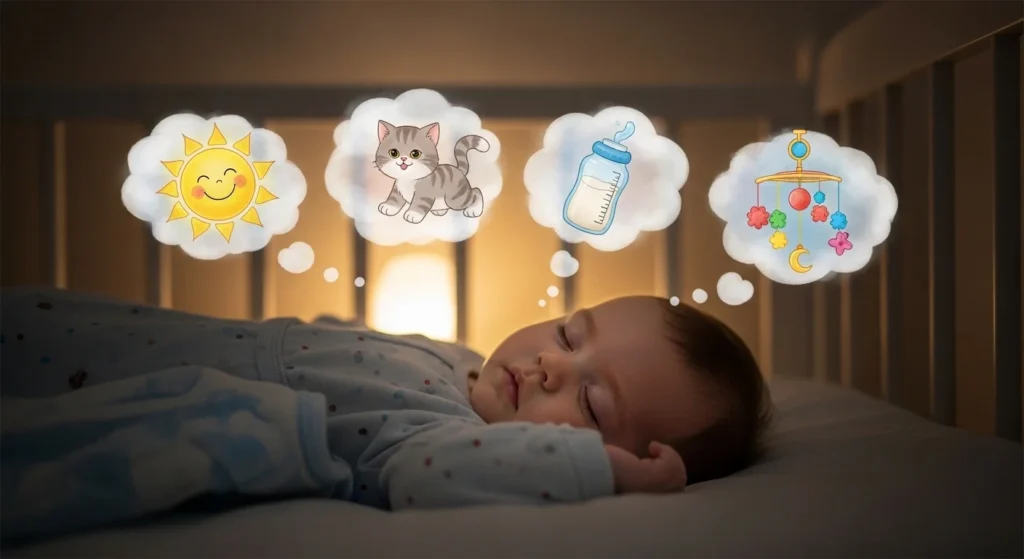
When we watch babies sleep, it’s hard not to wonder: do babies have dreams? Their tiny hands twitch, eyelids flutter, and occasionally a soft giggle escapes. Parents, caregivers, and curious minds alike search for answers because understanding baby dreams gives insight into infant development, emotional growth, and even communication. This article dives into whether babies dream, how their sleep cycles work, and playful ways to imagine what might be happening in their little minds.
How Do Babies Sleep and Dream? 💤
Baby sleep cycles are shorter than adults, lasting about 50–60 minutes.
REM (Rapid Eye Movement) sleep, the stage linked to dreaming, occupies a large part of a newborn’s sleep.
Twitching and facial expressions during sleep may indicate dream activity.
Dreaming may help process new sensations and experiences.
Wish: “May your dreams be as bright as your giggles!”
“Sleep peacefully, little dreamer, and explore magical worlds tonight.”
“May every nap spark tiny adventures in your mind.”
“Here’s to dreaming in colors only babies can imagine.”
“Sweet dreams, little star—may your imagination shine.”
“May your sleepy sighs carry you to playful dreamlands.”
“Rest well, little one, and let your dreams dance freely.”
“May your dreams be filled with cozy cuddles and warmth.”
“Sleep tight, tiny explorer, and discover dream worlds.”
“Wishing you dreams full of laughter and joy.”
“May your REM sleep be magical and restful.”
“Drift gently into dreams, little miracle.”
“May your dreams nurture your growing mind.”
“Sleep softly and awaken happy, little dreamer.”
“May each nap be a gateway to wonderland.”
“Sweet dreams, baby—your imagination is limitless.”
Signs That Babies Might Be Dreaming 🌙
Eye movements under closed eyelids.
Gentle kicking or arm movements.
Smiling, cooing, or occasional murmurs.
Rapid heartbeat during active sleep phases.
Pickup Line: “Are you dreaming too? Because your little giggles just stole my heart.”
“Tiny twitches, big adventures—your dreams must be amazing!”
“I bet you’re having a dream as sweet as your smile.”
“If dreams were candies, yours would be endless.”
“Twitching toes mean magical journeys in progress.”
“Every fluttering eyelid hides a secret adventure.”
“Your sleepy sighs whisper the language of dreams.”
“May your dreams be as playful as your wakeful smiles.”
“Even in sleep, your charm is unstoppable.”
“Sleepy giggles alert: dreamland activated!”
“Tiny hands, big dreams—keep exploring.”
“Your dreams must be painting the sky with colors.”
“Little eyelid movements, big imagination at work.”
“Every yawn is a passport to dreamland.”
“You dream, I smile—let’s call it a win-win.”
“Fluttering eyelids, magical minds—dream on, baby!”
Do Newborns Experience Dreams? 👶
Newborns spend nearly 50% of their sleep in REM, a stage linked to dreaming.
Dream content is likely sensory-based, reflecting sounds, lights, and touches.
Infants gradually develop memory, which influences dream content as they grow.
Dreams may help brain development and emotional regulation.
Wish: “May every new sound turn into a magical dream tonight.”
“Little one, may your dreams be filled with cuddly adventures.”
“Sleep and dream, little newborn, in a world all your own.”
“May your tiny heart guide you to happy dreamlands.”
“Dream big, even in tiny baby steps.”
“May each night bring gentle dream journeys.”
“Sleep peacefully, little miracle, the world is yours in dreams.”
“Tiny dreams, endless possibilities—explore them all.”
“May your dreams be as soft as your baby blanket.”
“Sleep well, baby, and let imagination bloom.”
“Each nap is a tiny adventure in your mind.”
“May your dreams whisper love and joy.”
“Rest, dream, and awaken smiling, little one.”
“Even in sleep, you create magic in dreams.”
“May dreams nurture your growing curiosity.”
“Sleep soundly, and let dreamland embrace you warmly.”
Fun Facts About Baby Dreams ✨
Babies’ dreams are unlikely to include complex stories.
Their dreams may reflect recent experiences like feeding or cuddling.
REM sleep stimulates brain development and emotional growth.
Twitches during sleep are a normal part of dreaming.
Pickup Line: “If dreaming were an art, you’d be Picasso in diapers.”
“Your tiny giggles could be the soundtrack of dreamland.”
“Even in dreams, you’re the cutest protagonist.”
“Every twitch hints at a secret adventure.”
“Little toes tapping—your imagination in action.”
“Nap-time magic = dream-time magic.”
“If dreams had flavors, yours would be sweet as honey.”
“Cuddly dreams for cuddly little humans.”
“Every fluttering eyelash is a clue to dreamland.”
“Dreams grow with you, tiny explorer.”
“Sleepy sighs, joyful dreams—perfect combo.”
“May your dreams teach you fun new things.”
“Dreams help little brains grow—keep twitching!”
“Even in sleep, you sparkle with imagination.”
“Little giggles = big dream adventures.”
“Dream on, baby, the world is magical.”
How Parents Can Encourage Positive Sleep 🌜
Maintain a consistent bedtime routine.
Ensure a calm and quiet sleeping environment.
Gentle rocking can promote REM sleep.
Avoid overstimulation before naps.
Wish: “May bedtime be peaceful and dreams joyful tonight.”
“Sweet dreams, little one, your parents love you endlessly.”
“May your nap times always be cozy and calm.”
“Sleep tight, dream bright.”
“May your dreams fill your tiny heart with joy.”
“Gentle lullabies, sweeter dreams.”
“Each night, may your dreams be a source of wonder.”
“May your sleep be deep and your dreams magical.”
“Rest well, little adventurer.”
“May dreams nourish your growth and curiosity.”
“Sleep peacefully, little miracle.”
“May bedtime stories echo in your dreams.”
“Dreams full of laughter and love await you.”
“Sleep tight, let your mind wander beautifully.”
“Gentle dreams for gentle hearts.”
“May your dreams bloom as you do every day.”
Common Myths About Baby Dreams 🍼
Babies can’t dream—myth! REM sleep suggests otherwise.
All baby dreams are scary—false! Most are likely neutral or joyful.
Dreaming requires memory—babies’ early sensory experiences suffice.
Dreaming means a baby is awake—no, it happens during sleep.
Pickup Line: “If dreams were stars, your twinkles would light the sky.”
“Tiny dreamer, every night is a canvas.”
“Sleepy adventures await—twitch and explore.”
“Your dreams may be the cutest things ever.”
“Even in dreams, you’re winning hearts.”
“Little eyes fluttering, big dream stories unfolding.”
“Tiny giggles, endless possibilities in dreams.”
“Sleep well, your dreams are magical realms.”
“Twitching toes, secret adventures—dream on!”
“Little smiles while sleeping = proof of dream magic.”
“Dreams are real in baby language.”
“Each nap is a tiny adventure in dreamland.”
“May your dreams spark your imagination daily.”
“Even newborns have stories in dreams.”
“Sleepy sighs, big dreams ahead.”
“Your dreams make the world brighter.”
Understanding Nighttime Movements 🌌
Twitches are normal and linked to REM sleep.
Smiles or coos may indicate pleasant dream sensations.
Twitching helps develop motor skills.
Observing movements gives insight into sleep patterns.
Wish: “May each twitch lead to joyful dreams tonight.”
“Sleep peacefully, little dream-weaver.”
“Tiny kicks, big dream adventures.”
“Your dreams are painting the sky in imagination.”
“Fluttering hands, magical journeys await.”
“May your dreams inspire smiles tomorrow.”
“Sleep tight, let dreamland hug you warmly.”
“Twinkling dreams for twinkling eyes.”
“May your dreams be cozy and uplifting.”
“Even little movements tell stories of imagination.”
“Nap well, dream well, little explorer.”
“May your dreams carry love and warmth.”
“Sleep softly, your dreams are beautiful.”
“Dreamland awaits your little adventures.”
“Tiny expressions, big dreams unfolding.”
“May your dreams be a safe and happy place.”
When to Worry About Baby Sleep 🛌
Persistent difficulty sleeping may need pediatric consultation.
Unusual pauses in breathing require medical attention.
Excessive restlessness can indicate discomfort or illness.
Most twitching and movements are normal.
Pickup Line: “Even dreamland can’t compete with your cuteness.”
“Sleep tight, healthy dreamer.”
“May dreams heal and refresh your tiny body.”
“Rest well, little one, adventures await.”
“Sweet dreams, full of love and warmth.”
“Sleep deeply, grow beautifully.”
“Gentle dreams, happy baby.”
“May your nights be safe and calm.”
“Nap peacefully, little angel.”
“Sleep, dream, and smile endlessly.”
“Even in dreams, you’re surrounded by love.”
“Restful sleep fuels joyful days.”
“Tiny dreamer, your health is magic.”
“Sleep tight, sweet little soul.”
“May dreamland always be gentle.”
“Sleep safely, grow happily, dream freely.”
FAQs
1. Do newborns actually dream?
Yes! Newborns spend a significant amount of time in REM sleep, which is strongly linked to dreaming. While their dreams are likely sensory-based rather than narrative, they are still processing experiences.
2. Why do babies twitch or smile while sleeping?
Twitching and facial movements during sleep are typical and may indicate REM sleep and dream activity. These movements also help develop motor skills and neural pathways.
3. Can babies have nightmares?
It’s unlikely that very young infants experience nightmares as adults do, because their cognitive and emotional processing is still developing. Most baby dreams are neutral or positive.
4. How can I help my baby have better sleep and dreams?
Maintain a consistent bedtime routine, create a calm sleep environment, and avoid overstimulation. Gentle rocking or lullabies can also help babies relax and enjoy deeper REM sleep.
5. At what age do babies’ dreams become more complex?
As memory and experiences grow, typically around 6–12 months, babies’ dreams may start reflecting familiar faces, activities, or playful scenarios.
Conclusion
So, do babies have dreams? Absolutely! From tiny twitches to sleepy giggles, every movement may hint at a world of sensory-rich dreams that nurture growth, development, and imagination. Parents can encourage peaceful sleep while enjoying the wonder of what their little ones might be dreaming. Remember, each fluttering eyelid and cooing sound is a window into the magical world of baby dreams—embrace it, enjoy it, and let your baby’s imagination flourish. 🌙💖