
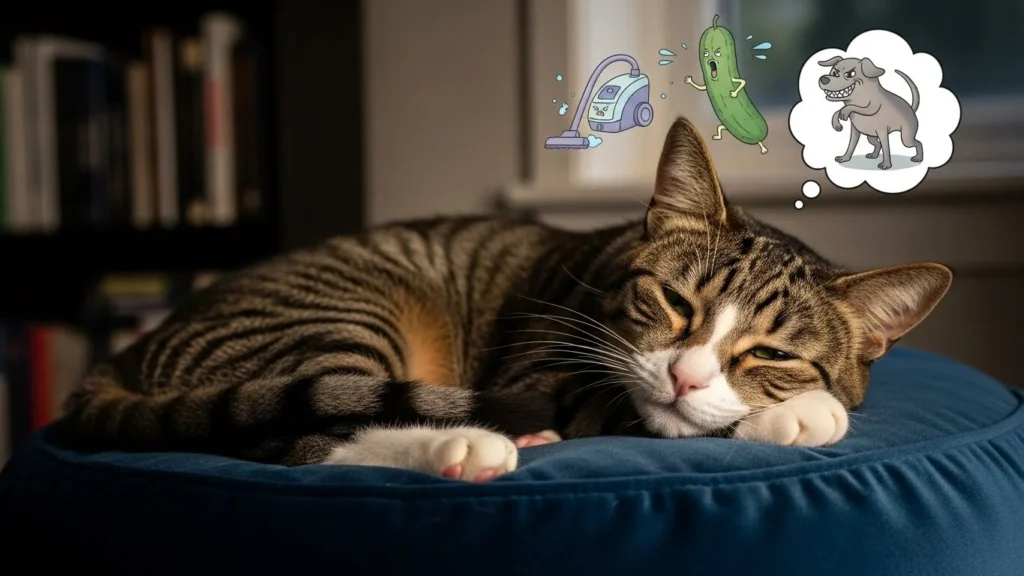
Do cats have bad dreams? If you’ve ever seen your furry friend twitching, pawing, or softly growling in their sleep, you’ve probably wondered what goes on in those mysterious little kitty minds. Many cat owners search for this question hoping to understand whether their adorable companions experience nightmares—or if it’s all just cute sleep behavior. From tiny kittens to wise old cats, dreaming is a natural part of feline life.
But what makes a cat’s dream “bad,” and how can you tell the difference between a scary dream and a playful paw twitch? In this guide, we’ll explore the science behind feline dreams, common signs of bad dreams, and fun ways to help your cat enjoy peaceful slumber. Whether you’re a curious cat parent or just love watching your kitty snooze, you’ll uncover everything you need to know about your cat’s nighttime adventures.
Signs Your Cat Might Have Bad Dreams 💤🐾
🐱 Twitching paws during sleep
🐾 Soft growling or meowing at night
😾 Sudden fur bristling
🐈 Tail flicking aggressively while snoozing
😿 Rapid eye movement under closed eyelids
💤 Jerky body movements
🐱 Hissing or low purring sounds
🐾 Paw paddling in the air
😾 Quick tail swats at nothing
🐈 Rolling over suddenly
🐱 Snarling in sleep
🐾 Ears flattening while dreaming
🐈 Whiskers twitching
😿 Sudden jumps awake
🐱 Kneading motions while tense
🐾 Scratching the air
🐈 Snorting or puffing noises
😾 Quick, restless movements
🐱 Mouth moving as if biting
🐾 Sudden repositioning as if fleeing
These signs suggest your kitty may be dreaming about stressful situations—like escaping a vacuum cleaner or chasing an elusive toy.
What Causes Cats to Have Bad Dreams? 🐾🌙
🐱 Stressful daytime events
🐾 Unfamiliar environments
😿 Loud noises or sudden disruptions
🐈 Encounters with other pets
🐱 Overstimulation from play
🐾 Hunger or discomfort
😾 Illness or pain
🐈 Anxiety about owners leaving
🐱 Trauma or past experiences
🐾 Overactive hunting instincts
🐈 Changes in household routines
🐱 Scary TV or video content
😿 Lack of safe spaces
🐾 Excess caffeine exposure in humans (indirect stress)
🐈 Poor sleeping surfaces
🐱 Environmental stressors like lights or smells
🐾 Moving homes or travel
😾 Seasonal changes affecting mood
🐱 Predatory dreams from instincts
🐈 Learned fear behaviors
Understanding the triggers can help cat owners minimize bad dreams and keep their pets calm.
Cute and Funny Cat Dream Wishes 🐾💖
😸 “May your dreams be filled with endless catnip fields!”
🐱 “Chase all the toy mice you want, little one.”
😽 “May your paws always land softly in dreamland.”
🐾 “Sleep tight and dream of sunny windowsills.”
😺 “No vacuum monsters in tonight’s dreams!”
🐱 “May your whiskers twitch only in joy.”
😸 “Dream of treats raining from the sky.”
🐾 “May your naps be uninterrupted and cozy.”
😽 “Pounce only on happy dreams.”
🐱 “May your dreams be fluffier than your fur.”
😺 “Chase the rainbow mice tonight.”
🐾 “May your dreams have endless yarn balls.”
😸 “Sleep soundly, fearless feline.”
🐱 “May you climb the highest cat tree in dreamland.”
😽 “Purr your way through pleasant adventures.”
🐾 “May your dreams be nap-filled, not nightmare-filled.”
😺 “Sleep like a lion, dream like a kitten.”
🐱 “May your dreams be full of sunny spots.”
😸 “Chase moonbeams and catch happiness.”
🐾 “Sleep tight, little hunter of joy.”
How Cats’ Dreams Affect Their Daytime Behavior 🐱☀️
🐾 Increased playfulness after fun dreams
😺 Nightmares may cause temporary grumpiness
🐱 Twitching memories influence waking paw movements
🐈 Better learning and memory consolidation
😸 More affectionate behavior
🐾 Improved hunting skills instinctively
🐱 Sleep recovery boosts mood
🐈 Nighttime stress may trigger cautious behavior
😺 Dreams can strengthen social bonds
🐾 Energy bursts during the day
🐱 Preference for familiar toys
🐈 Comfort-seeking behavior
😸 Grooming intensity may vary
🐾 Interaction with other pets may increase
🐱 Relaxation behaviors like kneading
🐈 Avoidance of previously stressful areas
😺 Enhanced curiosity post-nap
🐾 Vocalization may reflect dream emotions
🐱 Seeking warm, safe spaces
🐈 Appetite may improve or fluctuate
Dreams, both good and bad, are important for cats’ mental and emotional health.
How to Prevent Your Cat from Having Bad Dreams 🐾✨
🐱 Keep a consistent routine
🐾 Provide cozy, safe sleeping spaces
😽 Avoid loud noises at night
🐈 Ensure proper nutrition
🐱 Interactive play before bed
🐾 Reduce stressors in the environment
😺 Maintain familiar scents and toys
🐱 Avoid overstimulating content
🐾 Comfort your cat if anxious
🐈 Monitor health regularly
😸 Soft lighting for nighttime naps
🐱 Keep other pets’ interactions calm
🐾 Use calming sprays or pheromones
🐱 Provide gentle background sounds
😽 Avoid sudden changes in home layout
🐈 Encourage relaxation rituals
🐾 Provide plenty of mental stimulation during the day
🐱 Avoid punishing nighttime behaviors
😸 Recognize early signs of stress
🐾 Give plenty of love and reassurance
Fun Cat Dream Theories and Facts 🐱📚
🐾 Cats dream about hunting
😺 Cats may dream about playing
🐱 REM sleep occurs multiple times nightly
🐈 Dreaming helps process memories
😸 Kittens dream more than adult cats
🐾 Twitching is a sign of dreaming
🐱 Cats may dream about familiar humans
🐈 Purring can continue in dreams
😺 Cats process fears in dreams
🐾 Hunting instincts influence nightmares
🐱 Dreams may reflect daily experiences
🐈 Sleep cycles are shorter than humans
😸 Cats rarely sleep in one position all night
🐾 Dreams can help with problem-solving instincts
🐱 Social interactions influence dream content
🐈 Cats may dream in color and sound
😺 Naps and nighttime sleep both contribute to dreaming
🐾 Stressful dreams may be brief
🐱 Positive dreams boost daytime happiness
🐈 Dream behaviors are instinctual, not conscious
When to Worry About Your Cat’s Nightmares 🐱⚠️
😿 Frequent distress in sleep
🐾 Sudden aggression upon waking
🐈 Loss of appetite or lethargy
🐱 Unusual hiding or avoidance
🐾 Persistent vocalizations at night
😺 Tremors or unusual movements
🐈 Repeated pacing or restlessness
🐱 Vomiting or drooling during sleep
🐾 Excessive grooming post-nap
😿 Health issues may mimic nightmare behaviors
🐈 Consider a vet check if severe
🐱 Rule out medical causes for distress
🐾 Behavioral changes during the day
😺 Anxiety or phobias influencing dreams
🐈 Aggression toward family members
🐱 Loss of coordination
🐾 Repetitive sleep disturbances
😿 Excessive hiding spots sought
🐱 Nighttime hyperactivity
🐈 Sleepwalking or disorientation
FAQs
1. Do all cats have bad dreams?
Not all cats have bad dreams. Like humans, some cats experience more pleasant dreams, while others may have nightmares occasionally depending on stress or daily experiences.
2. Can I wake my cat if they’re having a bad dream?
You can, but gently. Sudden waking may startle them. Use soft voices or gentle touches to bring them out of a nightmare.
3. How do I know if my cat is dreaming or just moving?
Dreaming often occurs during REM sleep and is accompanied by twitching paws, whisker movements, or soft vocalizations.
4. Can bad dreams affect my cat’s health?
Frequent nightmares may cause stress, affecting mood, appetite, and overall wellbeing. Regular vet checkups can ensure no underlying issues.
5. How can I make my cat’s dreams happier?
Provide a calm environment, interactive play during the day, cozy sleeping spots, and reassurance to minimize stress and encourage positive dream experiences.
Conclusion
Cats are fascinating dreamers, and just like humans, they can experience both sweet and bad dreams. By observing their sleep behavior, understanding triggers, and creating a safe environment, you can help your feline friend enjoy peaceful, playful nights. Remember, a well-rested cat is a happy, curious, and affectionate companion. So next time you see your kitty twitching in sleep, smile—they may be chasing moonbeams or, occasionally, a fleeting nightmare! 🐾💖